
Protect yourself and those you love! The flu vaccine is available now at your local health department. It’s not too late to get vaccinated, and doing so can help prevent severe illness, hospitalization, and complications from influenza.
Health Department Locations
District 2 Public Health
There are four types of influenza viruses, A, B, C, and D. Influenza A and B viruses are responsible for the seasonal influenza that occurs in the late fall and winter months. Typically, Influenza A subtypes circulate earlier in the season and drive the main season, with B viruses circulating later in the season, peaking as Influenza A declines. As can be seen in the Respiratory Illness report, influenza activity in Georgia is very high (13 on a scale of 1-13) and activity is highest in children and young adults.
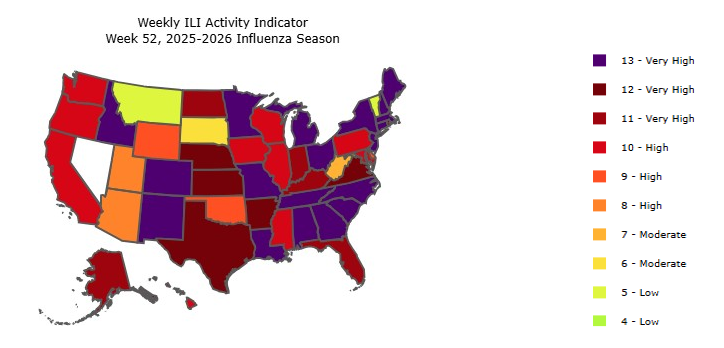

According to the CDC, the predominant subtype of influenza circulating at this time is Influenza A (H3N2) virus (85%) and of those that were further characterized, 90% are the H3N2 subclade K variant. In general, H3N2 strains are associated with more severe illnesses, especially in the elderly and young children. The subclade K variant has several mutations that allow it to partially evade some of the immunity provided by the current vaccine as the vaccine was formulated before the variant became dominant. However, the current influenza vaccine continues to provide protection against severe outcomes, hospitalizations, and death.
There are ways to protect yourself and your family from influenza. Vaccination is safe and effective, especially in preventing severe illness. If you have not been vaccinated, it is not too late to do so. Eating a healthy diet, exercise, and getting enough sleep also help boost your immune system. Since influenza can be spread by surface contact, washing your hands and avoiding touching your face and eyes can help prevent infection.
Most healthy people recover from influenza in 4-7 days. Elderly people, very young children, and people with chronic medical conditions are at greater risk of severe influenza. Symptoms of influenza include fever, chills, cough, muscle and joint pain, fatigue, headache, loss of appetite, and sometimes nausea, vomiting, and diarrhea. If you think you may have influenza, contact your medical provider. Your provider may order a test that can determine if you have influenza and prescribe an antiviral medication if indicated.
Finally, if you are sick, stay at home away from family members if possible, until you recover to avoid transmitting your infection to others.